
Governor Moore Embraces Bethel Center
Photos by Joe Andrucyk with the Governor’s office.
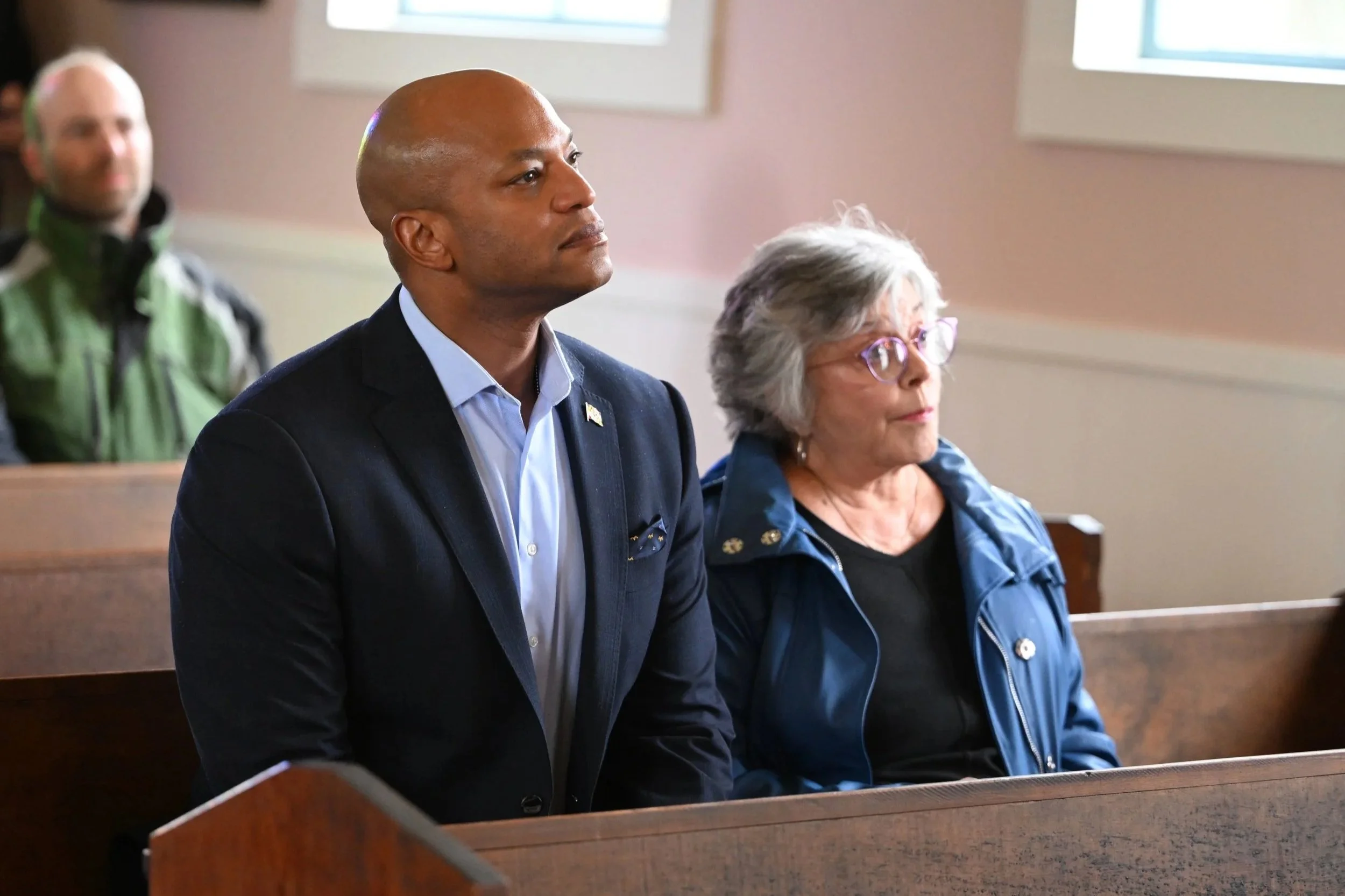
Seated beside Mountain Lake Park’s first lady, Suzie Sincell, Governor Wes Moore is at ease in Bethel Center, learning about Garrett County’s only A.M.E. Church, which was saved and restored.
A small group gathered to welcome Governor Wes Moore for his first visit to Bethel Center, Garrett County’s only African Methodist Episcopal Church that once served a vibrant community at the turn of the twentieth century. Mountain Lake Park became the final of three sites for what was originally known as the “colored” church, which opened its doors in September of 1900 in Oakland, Maryland. The former congregation relied on the church not only as a sanctuary but also as a school and community center for African Americans who were integral to the county’s formative years.
Mayor Don Sincell and his wife, Suzie, and town council members Jeff Hovis, Linda Fike, and Pam Nelson were on hand for the special occasion. Karen Wooddell, president of the Mountain Lake Park Historical Association, represented the Historic District, in which the church now stands. Jim Hinebaugh also attended as the outgoing Maryland Delegate for District 1A, which serves Garrett and part of Allegany County. Also in attendance were Jacob, Barbara, and Samuel Yoder, the former owners of the church building, which served as a blacksmith and harness shop on their family farm from 1935 until 2020. Jason Martin, who was also present, nearly single-handedly razed, moved, and restored the building to its original grandeur over the course of two years.
After a rousing round of personal introductions, Sincell addressed the governor and those in attendance, explaining that the church's history was all but lost after its congregation dwindled and the doors closed in the early 1930s. The circumstances of the closing are attributed to economic hardships following two world wars, the Great Depression, and the fading of the travel industry fed by the railroad. That, combined with presumed racial bias, prompted an exodus from Garrett County for African Americans seeking a better life. As the church’s community dispersed, family legacies vanished with them.
Kate Smith, a former African American resident and Oakland Town Council member, learned of the church and began an earnest investigation into the past, unearthing fascinating people who put down roots in Garrett County. They included shop owners, politicians, journalists, railroad ambassadors, and heralded community members. Direct descendants of those former residents achieved notoriety in entertainment, the sciences, education, and more. The church stands in memory of people long since gone, whose legacy is woven into Garrett County’s past well after their subsequent generations have moved on.
Following Sincell’s presentation, Moore asked about the number of visitors to the church, recognizing its historical significance. Sincell explained that the church opens for special events and occasions, but it is not open continually due to staffing demands.
“For Juneteenth, we will have the Garrett Choral Society singing in here,” Sincell said. “Oh my gosh. You should hear when the choir sings in here. The sound is so big because it reverberates in the space!”
This will mark the second year for the Juneteenth celebration in the church. Sincell also noted that Bethel Center is open during the Victorian Chautauqua, which draws thousands of people over the weekend following the Fourth of July. Including African American heritage in the program has been part of each year’s presentations.
“I can tell you as a very personal point of privilege, as the state’s first Black governor, being here is deeply meaningful,” Governor Moore shared as his voice briefly cracked. “This is a place of real power,” he noted as he slowly looked around, absorbing and imagining the past people who once sat where he now was.
He commented on the “collective family” that it took to ensure the church would be around and that the stories would not be lost. Moore then turned to Martin and the Yoder family to acknowledge the people who did all the work to preserve it and to pass it down. “This is really beautiful. This is really beautiful,” he said.
“When you think about the things that happened here,” the governor continued. “The joys of life, the challenges of life. One of the things that faith brings us is a sense of peace in the chaos.”
His statement rang true, as the mood in the room was heavy yet light, dire yet bright, and the warmth of the governor’s glow engulfed the makeshift congregation of varied souls sharing in a private yet communal moment. Powerful indeed.
And as the visit came to a close, Governor Moore took the time to write his thoughts for the message box that hangs on the back wall of Bethel Center. Before leaving, visitors are encouraged to write a note to the past, present, or future to contemplate and release their thoughts in the hallowed space. Each rolled and bound with a rubber band, the growing collection of notes remains in the church, just as the spirits of past parishioners continue to fill the peaceful air.
As a memento of his visit, Sincell gave the governor a piece of the church’s original siding, mounted in a commemorative frame. The keepsakes were made from lumber too deteriorated to reuse in the restoration. Rustic with flakes of white paint clinging to the deeply veined poplar, it demonstrates the passage of time. Moore was also given an original program from the rededication ceremony held in September of 2024. The program includes the story of the church’s restoration and relocation, as well as recognizing prominent African American families who influenced Garrett County’s founding years.
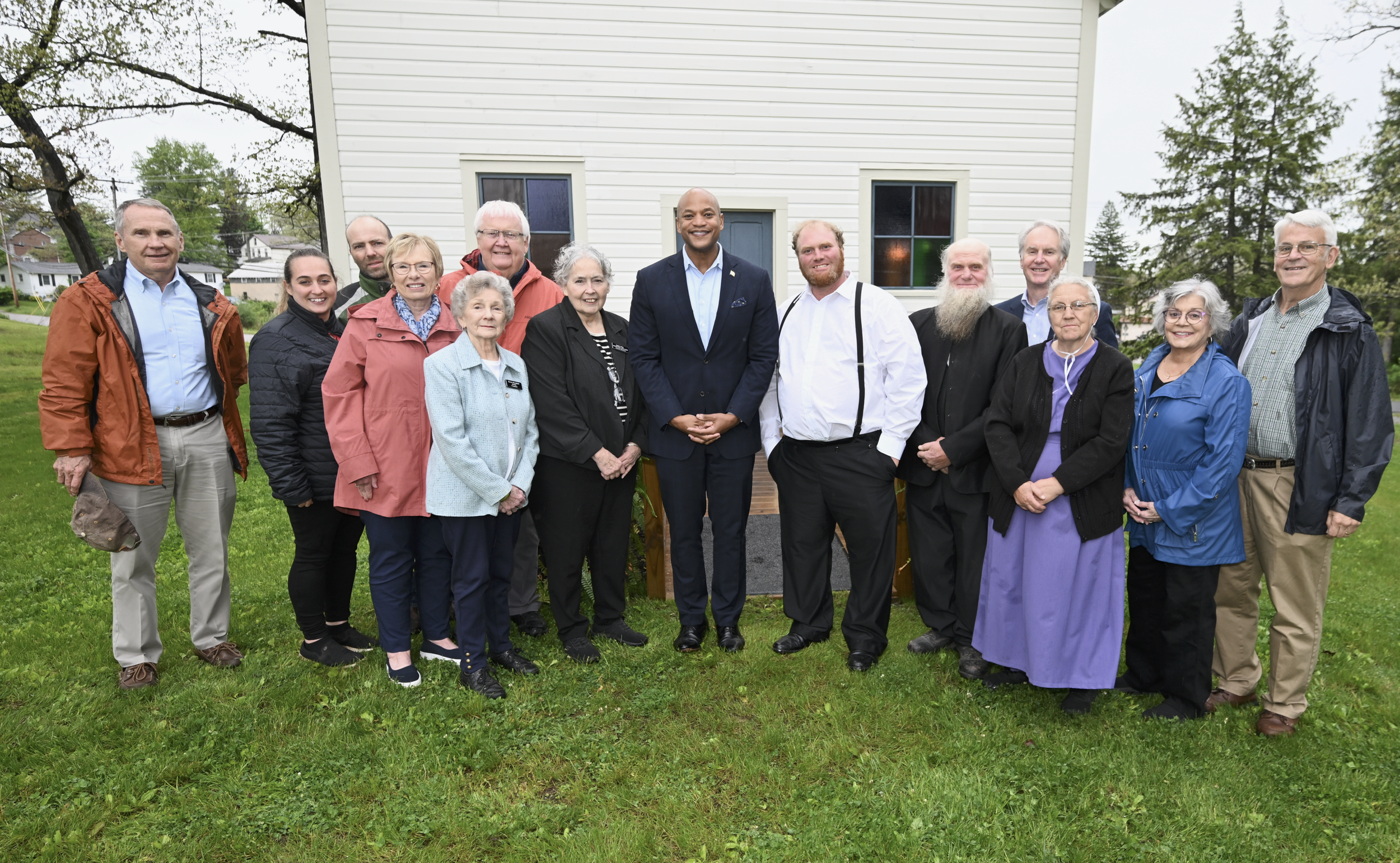
Pictured: Jim Hinebaugh, Rebecca Martin, Jason Martin, Pam Nelson, Karen Wooddell, John Nelson, Linda Fike, Jacob Yoder, Samuel Yoder, Jeff Hovis, Barbara Yoder, Suzie Sincell, Don Sincell.
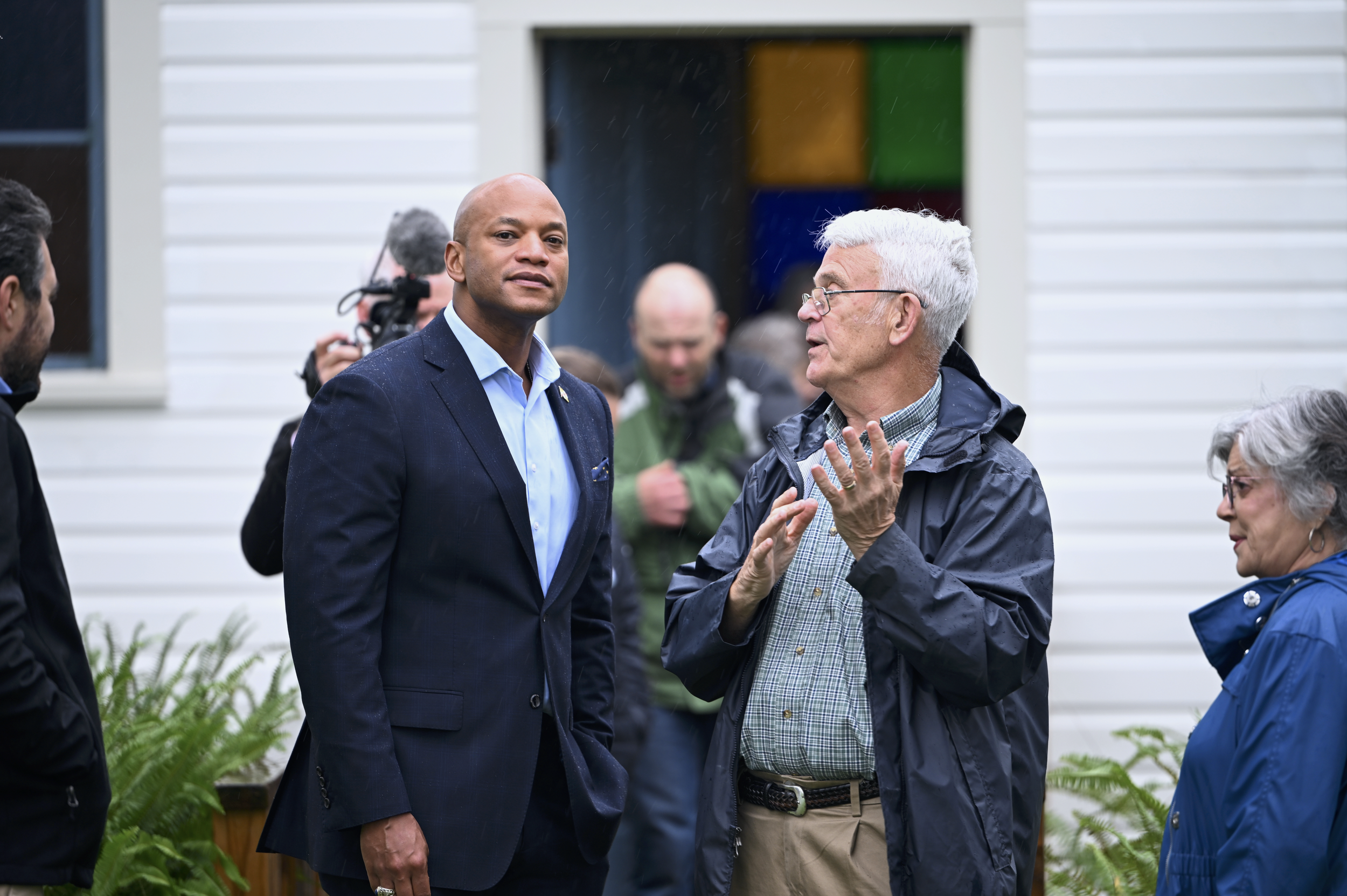
A gentle rain didn’t dampen the spirits of everyone joining Governor Moore at Bethel Center.
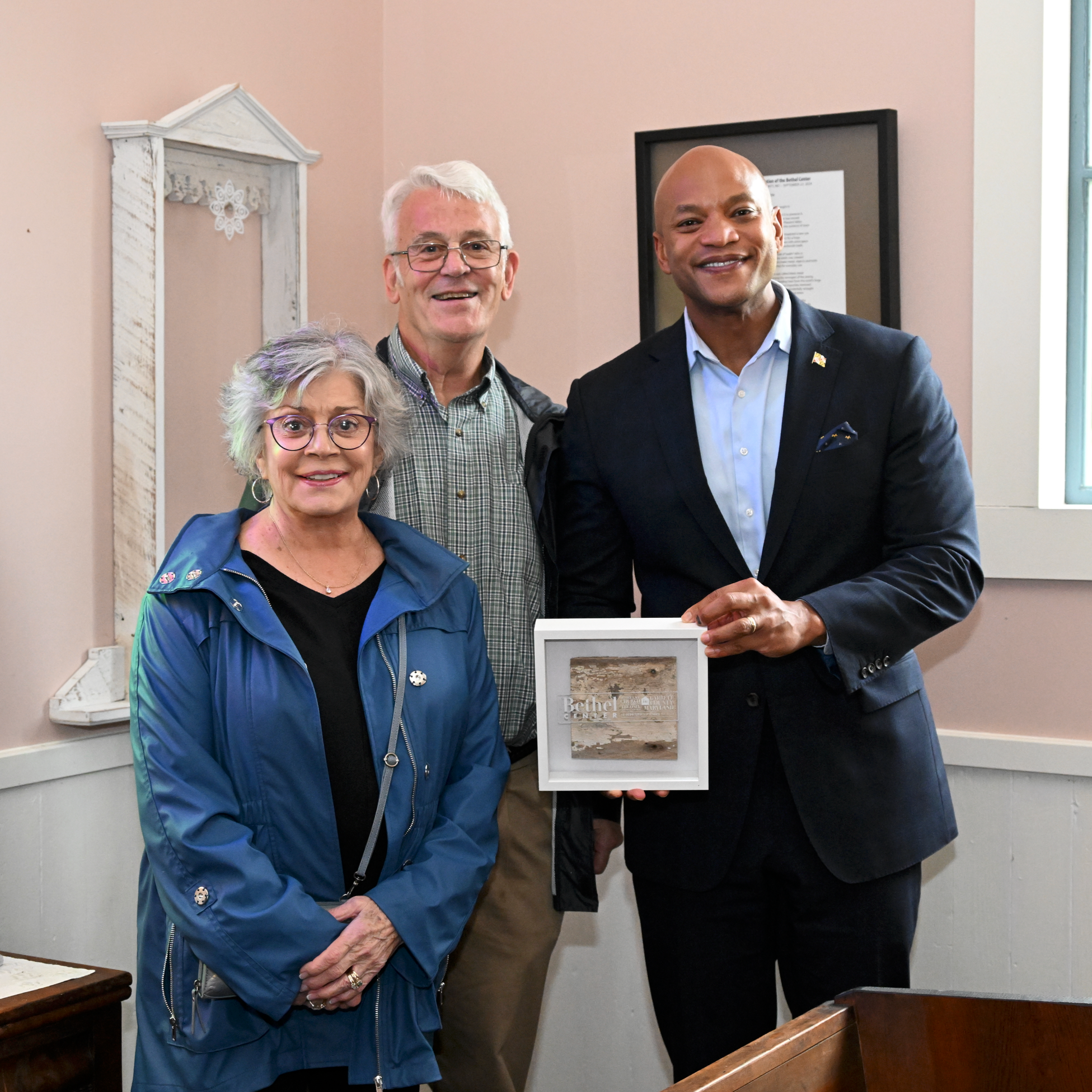
Mayor Don and Suzie Sincell present Governor Moore with a salvaged piece of the A.M.E. Church siding.
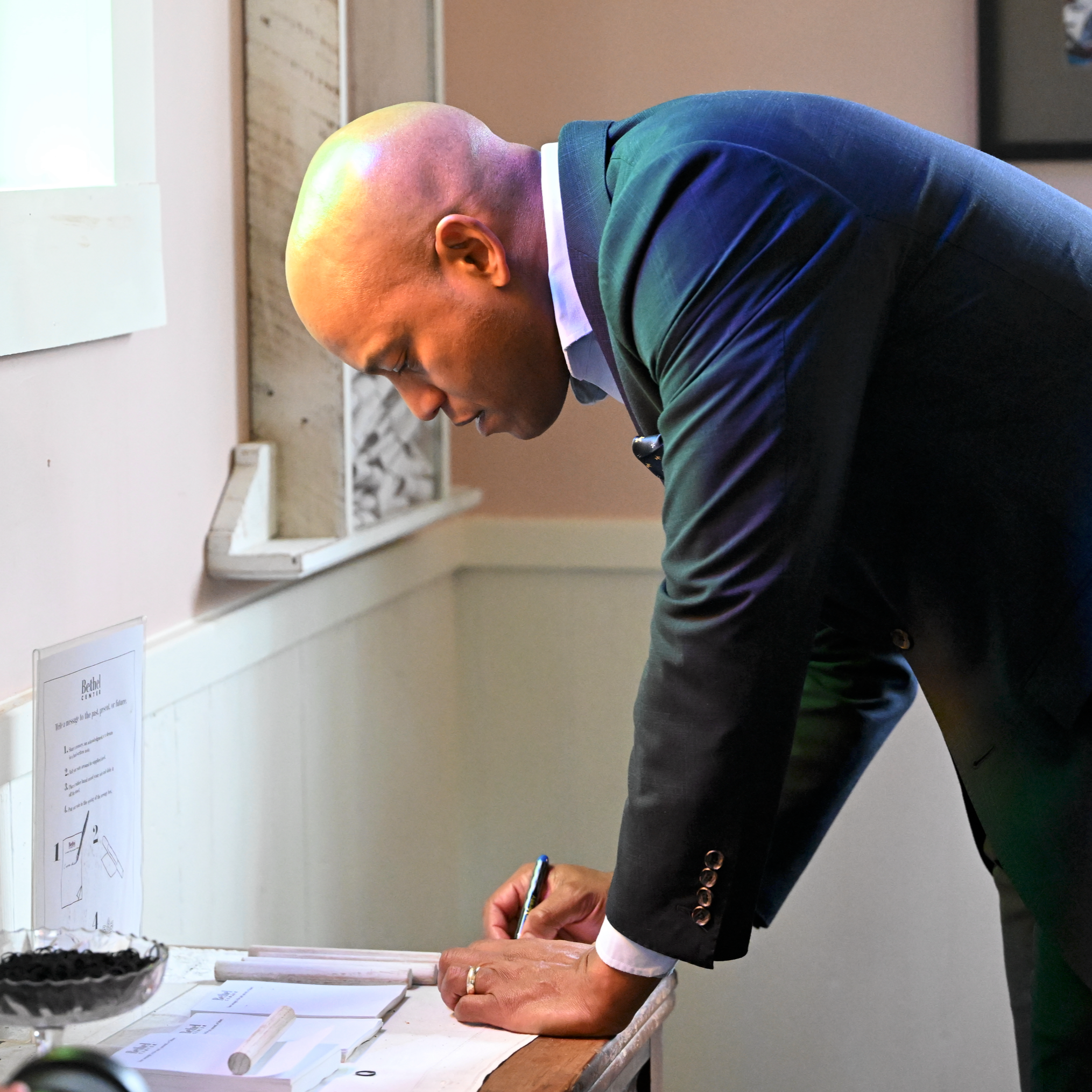
Governor Moore writes a note for Bethel Center’s message box.
